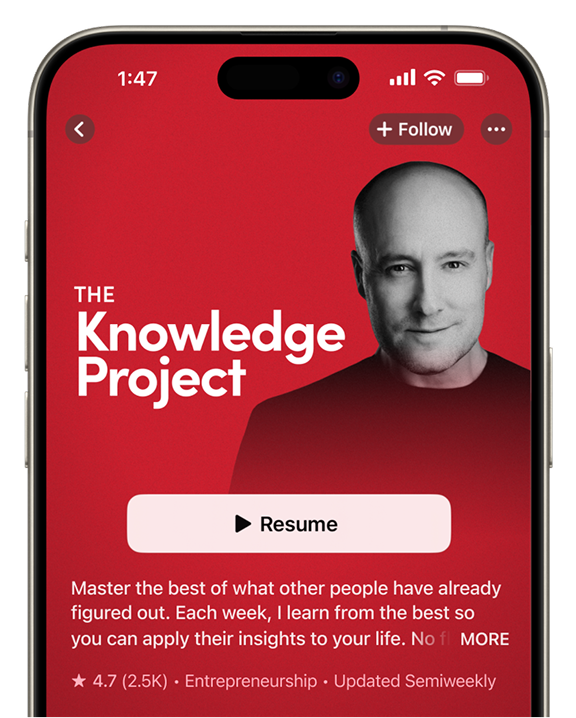
What if the greatest coach in NFL history succeeded not through complex schemes, but by relentlessly focusing on doing the simple things right every single time?
In this episode, Bill Belichick, the former head coach of the New England Patriots and winner of eight Super Bowls, shares the principles behind building championship teams. The conversation reveals how discipline, preparation, and putting the team first matter more than raw talent, and why most games are lost rather than won in professional sports.
Available now: YouTube | Apple Podcasts | Spotify | Transcript
Bill Belichick is the former coach of the New England Patriots. He is currently the head football coach at the University of North Carolina at Chapel Hill and has recently published The Art of Winning.
Key takeaways
- Four daily principles guided the Patriots organization: do your job, work hard, be attentive, and put the team first, because consistency in fundamentals determines championship success more than exceptional plays.
- Working hard means accomplishing specific goals rather than just putting in time, as players who merely “check the box” without productive output are essentially taking days off.
- Tom Brady started as a fourth-string quarterback in his rookie year, showing that an exceptional work ethic can overcome talent gaps when stacked consistently over time.
- You cannot win until you keep from losing, because self-inflicted errors like pre-snap penalties and unnecessary turnovers defeat teams more often than opponents’ great plays.
- Elite competitors remain competitive in everything they do, from water-drinking contests to trivia games, because the drive to win transcends the specific activity or reward.
- The “drawer” concept helps players focus during crucial periods by mentally storing non-essential matters to deal with after the season, maximizing performance when it matters most.
- Building a team differs from collecting talent because functional efficiency requires players who communicate, cooperate, and understand their roles within multiple specialized units.
- Virtual reality training allows quarterbacks to get mental reps at accelerated speeds without physical strain, revolutionizing how injured players maintain readiness.
- Discipline means doing the right thing every single time, as consistency separates elite performers from talented players who produce sporadically.
- The price of success must be paid in advance through preparation, because you cannot recover from inadequate preparation once competition begins.
- Starting at the bottom of an organization provides an invaluable understanding of how all departments intersect, creating better leaders who appreciate every role.
- Managing expectations requires focusing only on what you can control this week, rather than feeding speculation about future achievements or individual accolades.
- Owning mistakes quickly during games enables rapid corrections, while blame games waste precious time and prevent effective adjustments.
- Different players require different motivation approaches, from direct challenges to showing how team-first actions create individual opportunities.
- Social media relationships matter less than earning daily trust and respect from teammates who depend on you in critical moments.
- Championship teams function as “teams of teams” with offense, defense, and special teams units that must each excel in their specific situations.
The Foundation of Winning: Core Principles and Daily Standards
Belichick opens by explaining the four principles posted at the Patriots facility entrance: do your job, work hard, be attentive, and put the team first.
These weren’t motivational posters but rather the daily game plan that applied equally whether preparing for the AFC Championship or conducting March workouts.
Every employee, from coaches to staff members, saw these same principles because every job contributes to winning. Belichick emphasizes that being attentive and working hard represents the formula for improvement.
The discussion of hard work reveals a crucial distinction between showing up and being productive. Belichick describes “eye wash” as performative work where players go through motions without accomplishing anything meaningful. A player can practice, break a sweat, and check boxes while essentially taking a day off if they don’t achieve specific improvements.
The phrase “no days off” actually means coming to work with purpose and accomplishing set objectives that build toward team goals.
“You come to work and you go to work. You don’t come to work, check the box, kill the time, and then leave.”
When Work Ethic Surpasses Raw Talent
Belichick shares compelling examples of players whose work ethic allowed them to overcome talent limitations and secure roster spots. Tom Brady exemplifies this principle, starting as a fourth-string quarterback when teams rarely keep three, let alone four quarterbacks. Steve Neal never played football at any level before the NFL, transitioning from college wrestling to become a starting offensive guard for seven years. Julian Edelman switched from college quarterback to receiver and punt returner, positions he’d never played before.
These success stories demonstrate how sustained daily improvement through exceptional work ethic levels the playing field against more naturally gifted athletes. While talent might carry players through high school and college, the NFL’s competitive level demands consistent application of that talent through training and preparation. Belichick notes that approximately 95% of NFL players must maintain intense work habits to remain competitive, as only a rare few possess such elite talent that they can coast.
The Nature of Elite Competition
Truly competitive people compete at everything. Belichick describes team competitions over trivial prizes like T-shirts or an hour later curfew that generated intense effort from millionaire athletes.
These competitions served dual purposes: team building and satisfying the competitive drive that defines elite performers. One memorable example involved rookie offensive and defensive linemen competing to catch punts, with teammates passionately rooting for players attempting something they’d likely never done before.
Belichick’s observations about Michael Jordan’s documentary “The Last Dance” lead to insights about how top competitors can wear down less competitive teammates. Those who truly love competition join in and match that energy, while others resist competing at such intense levels consistently.
Competitive fire isn’t something that can be turned on and off, but rather permeates every aspect of elite performers’ lives.
“They compete and honestly, it isn’t even necessarily for the prize at the end. It’s just to be able to say, ‘I won.'”
Preventing Self-Destruction Before Pursuing Victory
Belichick introduces the concept “you cannot win until you keep from losing,” explaining how teams beat themselves through controllable errors more often than opponents win through spectacular plays. Examples include performance-enhancing drug suspensions, inadequate hydration leading to pulled muscles, and pre-snap penalties like false starts or too many men on the field. These mistakes have nothing to do with the opponent’s quality but represent internal inefficiency and lack of discipline.
Post-whistle penalties particularly frustrate coaches because they occur after plays end, resulting from emotional lapses rather than competitive action. Belichick emphasizes that more games are lost than won in the NFL, with teams frequently having multiple opportunities to win but defeating themselves through poor execution, missed assignments, or bad clock management. The philosophy extends beyond game day to include academic eligibility in college and legal issues that sideline players before they ever reach the field.
The Drawer: Mental Focus Management for Peak Performance
The “drawer” concept emerged as a mental tool for managing distractions during crucial season stretches, particularly around holidays and playoffs. Players are encouraged to mentally file away non-essential matters like shopping, endorsements, or minor personal business until after the season. This doesn’t apply to important family matters but rather to the countless small distractions that accumulate and steal focus from preparation and recovery.
Belichick recalls players joking about needing bigger drawers or multiple drawers as the season progressed, but the concept’s effectiveness lay in its simplicity. By compartmentalizing non-urgent matters, players could dedicate their full attention to the special opportunity before them. The approach acknowledges that these matters exist and will need attention eventually, while protecting the precious time when championship opportunities are within reach.
How Technology and Social Media Changed Team Dynamics
While cell phones and smart devices are banned from meetings, Belichick acknowledges their impact on team culture once meetings end. He emphasizes that the most important relationships for players are with teammates in the locker room, not social media followers. Trust and respect must be earned daily through preparation and reliability, creating confidence that allows aggressive play without hesitation about whether teammates will execute their assignments.
Belichick draws parallels to Navy SEALs and Blue Angels, elite teams where absolute trust enables performance at the highest levels. In football, knowing your teammate will be in the right position allows you to play faster and more aggressively. When players don’t trust each other, hesitation creeps in as they wait to see what happens rather than executing with confidence. This trust cannot be built through social media but only through daily demonstration of commitment and competence.
“What’s more important is what the guy next to you thinks about you and the respect that you guys have for each other.”
Virtual Reality and the Evolution of Player Preparation
Technology’s positive impact appears most clearly in training tools like the virtual reality system Jayden Daniels used, which Belichick describes as incredibly realistic and difficult to obtain. The system allows quarterbacks to experience game situations through goggles, creating sensations of getting hit while seeing defensive alignments and reactions. Users can adjust game speed to 105-110% of normal, forcing even quicker decision-making than required in actual games.
This technology particularly benefits injured players who cannot practice physically but need mental repetitions to maintain readiness. A player with a leg injury can continue reading defenses and making decisions without the physical stress of practice. Beyond VR, analytical tools now group plays and situations for quicker research, though Belichick notes everyone has access to similar analytical capabilities, making the differentiator how teams apply these tools rather than the tools themselves.
Discipline as Consistent Excellence, Not Occasional Brilliance
Belichick defines discipline as doing the right thing every single time, emphasizing that consistency separates truly elite players from those who produce sporadically. In the NFL, where all players possess high-level skills, the ability to execute properly on every play becomes the crucial differentiator. Players who maintain disciplined routines over 8-10 year careers sustain performance levels that seem to defy aging, while less disciplined players see their careers shortened despite comparable talent.
The shopping cart analogy illustrates this principle: discipline means returning the cart when nobody’s watching, getting treatment two days before Christmas, and maintaining productive routines regardless of circumstances. Examples like Matt Slater, Devin McCourty, and Tom Brady show how disciplined consistency extends careers far beyond normal expectations. Their routines remain so consistent that the anticipated age-related decline never materializes as expected.
Motivation Through Understanding Individual and Team Goals
Belichick reveals sophisticated approaches to motivating different player personalities, sometimes appealing to team goals and other times showing how team actions benefit individual achievement. The example of convincing a receiver to block involves explaining how establishing the blocking play sets up future opportunities for pass receptions when defenses adjust. This approach gets both team needs met (the block) and individual desires satisfied (future receptions).
Direct challenges based on previous losses or opponent comments can motivate most players, as losses become personal affronts to competitive athletes. Belichick also describes motivating through transparency about roles and expectations, illustrated by Jimmy Johnson’s story about cutting a special teams player for falling asleep in a meeting while acknowledging that star players might receive a quiet nudge instead. The message: players without established production have no margin for error.
“If you don’t have that kind of résumé, if you haven’t had that kind of production for this team, nobody wants that. You’re replaceable.”
Starting From the Bottom Builds Complete Understanding
Belichick reflects on beginning his NFL career working for free, doing every menial task from shooting film to sharpening pencils. This experience proved invaluable as he advanced, providing a deep understanding of how organizations function at every level. He knew which tasks were difficult, what problems arose in different departments, and could show genuine appreciation for people in every role because he’d performed those jobs himself.
Young staff members often want to skip foundational experiences, focusing on titles like “run game coordinator” or “blitz coordinator” rather than understanding organizational mechanics. Belichick never held a General Manager title despite functioning in that role for nearly 30 years, illustrating that titles matter less than actual responsibilities. His advice emphasizes embracing entry-level positions to understand organizational intersections, conflicts, and efficiencies that become crucial when leading at higher levels.
Building Teams Versus Collecting Individual Talent
The distinction between building teams and collecting talent centers on functional efficiency rather than individual statistics. Football requires “teams of teams,” including offense, defense, special teams, and situation-specific units like goal-line or two-minute packages. Each unit must function cohesively, with players understanding their roles and communicating effectively to accomplish collective goals.
Belichick emphasizes that shared responsibilities and efficient cooperation matter more than collecting players with impressive individual skills. A team mentality, willingness to communicate, and ability to work within multiple specialized units determine success. This philosophy explains why Patriots teams often succeeded with players considered less talented individually but who understood their roles and executed them consistently within the team framework.
Learning From Losses: The 24-Hour Rule and Moving Forward
After wins or losses, the Patriots implemented a 24-hour rule for processing games before moving forward. This period allows thorough analysis of what worked, what failed, what adjustments were needed, and what coaching errors occurred. After 24 hours, teams must shift focus entirely to the next opponent, incorporating relevant lessons while avoiding dwelling on past results.
“On to Cincinnati” became a catchphrase after a devastating loss to Kansas City, embodying this philosophy of quick recovery and refocus. Belichick describes literally burying a football after one loss, creating a visual funeral for the game to help players move past disappointment. These techniques acknowledge that dwelling on losses or victories beyond the learning period becomes counterproductive, especially in a league where every week brings new challenges.
Correcting Mistakes Quickly During Games
Time-sensitive mistake correction during games reveals character and determines outcomes. When players immediately own mistakes, saying “That’s my fault, I’ll make the play next time,” it clears confusion and allows teammates to maintain confidence in the system. Conversely, blame games waste precious time determining what went wrong instead of fixing problems.
Belichick emphasizes that coaches must also own their mistakes quickly, admitting when play calls were poor and won’t be repeated. This transparency from leadership models the behavior expected from players. Sometimes issues are complex, requiring rapid collaborative problem-solving, but identifying and fixing mistakes quickly prevents repeated failures. The ability to diagnose and correct errors under pressure separates championship teams from those that compound mistakes through confusion and finger-pointing.
Managing External Noise and Internal Expectations
The exit sign at the Patriots facility reminded everyone to “ignore the noise, manage expectations, speak for yourself, and don’t believe or fuel the hype.” These principles address external pressures that derail focus from immediate objectives. Speaking for yourself means avoiding predictions about teammates’ performance or creating expectations others must address. Ignoring noise acknowledges that commentators lack inside knowledge of game plans, matchups, and preparation details.
Managing expectations means focusing on the current week rather than discussing division titles or playoff positioning prematurely. When players or coaches fuel hype by making bold predictions, it creates distractions as everyone must respond to those statements. Belichick emphasizes keeping expectations realistic and immediate: have a good practice today, win this week’s game, avoid creating narratives that extend beyond current controllable objectives.
The Atlanta Super Bowl: Control Without Score
Belichick provides fascinating insight into Super Bowl LI’s historic comeback from 28-3 down, revealing that the team felt they controlled the game despite the score. Multiple scoring opportunities were lost to a pick-six, a fumble, and other mistakes that skewed the score without reflecting game control. This created unusual confidence despite the massive deficit.
The comeback required perfect execution for 20 minutes with zero margin for error. Two two-point conversions, a strip sack, multiple three-and-outs, and special teams tackles inside the 15-yard line all had to occur. Belichick acknowledges that while the team maintained confidence because they felt they controlled play, the score gap meant everything had to go right, and remarkably, it did. This example illustrates how game control and score control represent different dynamics that don’t always align.
“Sometimes you play a game and you feel like you have control of the game, but you don’t have control of the score.”
Resources
- The Last Dance (Documentary/Miniseries)
- The Daily Coach (Podcast and Newsletter)
- The Art of Winning