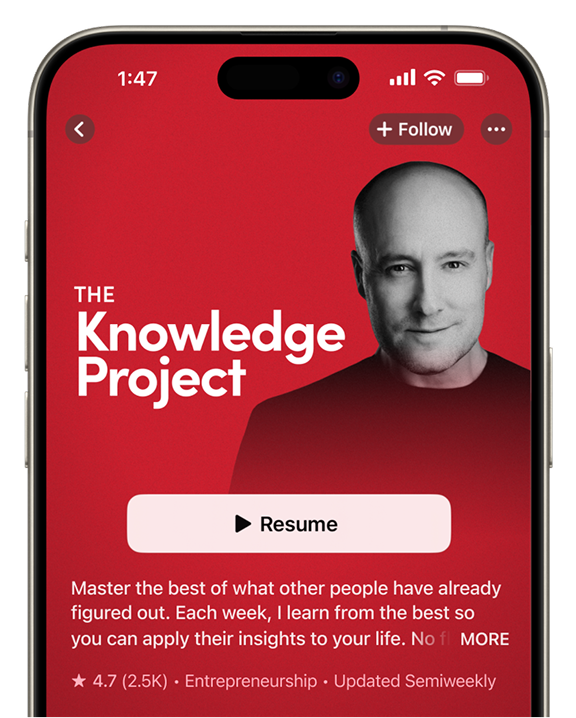
My guest today is Ron Shaich, founder of Panera and chairman of CAVA.
The headlines will tell you that Ron built Panera into a $7.8 billion company, but the real story is far more interesting.
Featured clips
The most powerful skill you can learn
The Au Bon Pain IPO Changed Everything
The keys to building a great company
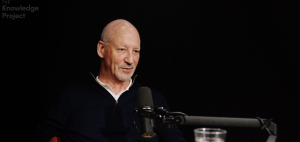
The biggest fallacy of life
Available Now: Apple Podcasts | Spotify | Transcript | YouTube | X
His philosophy is simple: Be long-term greedy, not short-term stupid.
+ Members have access to all 43 of my highlights from Ron’s Book
Lessons
- Play where you have an edge. If you’re not the best alternative for a target customer, it’s a tough business. You want to be so good that people walk past competitors to reach you.
- Means, not byproducts. Ron’s friend is a type-one diabetic. His goal is to live as long as anyone else, but he can’t control that; it’s a byproduct. What he controls is keeping his blood sugar between 80 and 180. Companies that chase the byproduct (the stock price, the bottom line) never get there because they miss what creates it.
- Long-term greedy beats short-term stupid. One company had an E. coli scare. Their immediate reaction was to cut labor. Ron told them they were nuts; they’d destroy years of cultural work in an instant. What you do is more important than what you say.
- If it’s worth doing, it’s worth going all in. In 1999, Ron ran a public company with four divisions. Au Bon Pain was the name on the door, but Panera had the potential to be nationally dominant. His friend asked: “What if Panera owned everything?” Two months later, Ron sold every other division and bet it all on Panera, which became the best-performing restaurant stock over the past two decades.
- Empathy can be a competitive advantage. Ron watched as customers took the bread he was selling and sliced it to make their own sandwich. They didn’t want bread. They wanted lunch. That observation rebuilt a bankrupt company into a category.
- The best live in the details. The best live in the details. Too many people want the gist of things. The best want the details. Ron pores over the data and constantly talks to customers.
- Do the work before you build. Do the work before you build. While move fast and fail fast might work in technology, it doesn’t work in industries with high fixed costs.
- The seventh inning test. Don’t wait till the end of life to check in on how you are living, how you are acting, and ensuring you’re spending time on things that matter to you.
- There is no balance, only choices. Ron’s been married twice. He doesn’t know if that’s because he was committed to his business, but sometimes he thinks about it. The biggest fallacy is believing you can have everything.
Maxims
- Complexity kills more companies than competition.
- Long-term greedy, not short-term stupid.
- Innovation dies when efficiency takes over.
- Focus on the means, not the byproduct.
- Not all money is the same.
- Commitment owns you. You don’t own it.
- The best seek out the details.
- Failing fast works in software, not restaurants.
- What you do is more important than what you say.
- Be something special for somebody. Don’t try to be everything for everybody.
- There is no balance. You make choices.
- Get the trend right.
- If you can’t be the best alternative, don’t compete.
- Structure defines capability.
- When you focus exclusively on the bottom line, you destroy the customer experience.
- Obsession isn’t a problem. It’s an advantage.
- Find a mentor: Nobody goes up Everest without a guide.
- You can’t scale what you don’t understand.
- The world doesn’t need another business. It needs a better one.
- Marketing is amplification.
- Profit is the result, not the goal.
- People want to feel special in a world where they don’t.
- The greatest risk is underinvesting in what works.
- Most entrepreneurs regret going public.
- Build something worthy of those who believed in you.
- Food is about more than what you put in your stomach.
- It’s easier to exercise every day than five days a week.