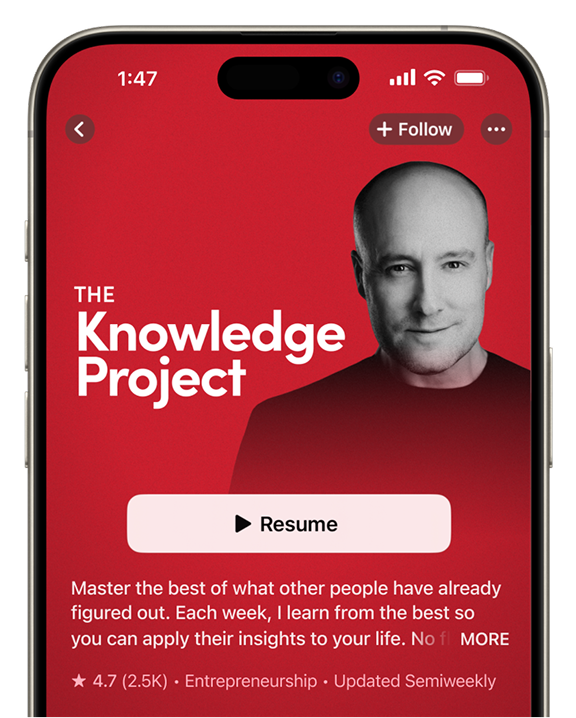
How do you build a high-performance culture without turning your company into the Hunger Games? Reed Hastings, co-founder and former CEO of Netflix, shares lessons from a career spent rewriting the rules—from severance as a management tool to “big-hearted champions who pick up the trash.” In this episode, he reveals how Netflix scaled trust, made bold bets before the data was in, and kept its edge by treating employees like adults—not assets. You’ll hear how Hastings evaluates talent beyond the interview, the reason he avoids performance improvement plans, and what most leaders misunderstand about judgment, feedback, and innovation.
You’ll also hear why he placed a $100 million bet on House of Cards with no pilot, how Drive to Survive changed an entire sport, and why Squid Game caught even Netflix by surprise.
Now focused on a new chapter—owning a ski mountain, reshaping education through AI tutors, and supporting charter schools—Hastings is still doing what he does best: building systems that scale culture, not just product.
If you care about performance without politics—or culture without the clichés—this is a blueprint from one of the clearest thinkers in modern business.
Listen now: YouTube | Apple Podcasts | Spotify | Transcript
Reed Hastings is the co-founder and chairman of Netflix. From 1998-2020, he served as its CEO.
10 Lessons from my Conversation with Reed Hastings:
1. The Keeper Test: Reed asked managers at Netflix: “If one of your employees were quitting, how hard would you work to keep them?” Most companies are slow to get rid of people that are not the right fit. Netflix flipped this. If you wouldn’t fight to keep someone, exit them now (with a generous severance package). Professional sports teams upgrade constantly. So should companies.
2. Steal the References: Reed never asks candidates directly references. Instead, he combs LinkedIn to find people at their prior employer, that he might know and reaches out. “You’ve got to find intermediates… more loyal to me than they are to the candidate.” The best references get you closer to the truth, not PR.
3. Nobody’s Watching: “I’ll have a meal with them and see how they interact with the service staff,” Reed says about interviewing. Forget the rehearsed answers about strengths and weaknesses. Watch how candidates treat people who can’t help their career. Character shows when nobody important is watching.
4. Pay to Fire: Netflix gives massive severance packages. Not for kindness, for velocity. “Managers are generally selected because they have good human skills and they like people, so it’s very hard for them to let people go.” The money reduces the friction of letting people go. It gets you a legal release. It eliminates performance improvement plans that rarely work. And most importantly, it gives managers permission to act. Generous severance isn’t employee benefit. It’s management lubricant.
5. Instinct Over Data: Netflix bet $100 million on House of Cards without seeing a pilot. HBO wouldn’t match, they had precedent. “There’s some data, but I would say it’s instinct,” Reed admits about most content decisions. The later in production, the more you know. But even after 20 years in the business, Squid Game’s global explosion surprised. Data tells you what worked yesterday. Instinct sniffs at what might work tomorrow. The biggest wins violate the spreadsheet.
6. Trust the Expenses: Netflix eliminated all expense policies. No per-diem rates for Tokyo versus New York. No approval chains. Just five words: “Act at Netflix’s best interest.” Sure, someone might abuse it. But the cost of that abuse? Tiny compared to maintaining expense policy bureaucracy: the forms, approvals, trainings, disputes. If someone abuses it, fire them. Sometimes rules cost more than rule-breaking.
7. Culture As Repellent: In 2009, Netflix published their internal culture deck publicly. Not to attract talent, to keep away the wrong people. “People who fundamentally wanted job security over growth were repelled and the people who wanted growth and were willing to trade off job security loved it.” Netflix used company culture it as a filter before hiring. The deck looked “unofficial” because it was just internal training slides. The best way to hire better, is to improve the selection pool.
8. Change the Game: Powder Mountain ski resort can’t compete with Epic and Ikon mega-passes. Instead, Reed decided to counter-position hard, offering a premium, uncrowded, experience. Independent ski resorts face a choice: join the giants and lose profits, or become something entirely different. Middle ground is death. When you can’t compete directly, don’t force it. Change the game.
9. Work-Life Integration, Not Balance: “I think of it as work-life integration,” Reed mentions. Balance implies zero-sum: more of one means less of another. Integration means both can win. Stop balancing. Start blending.
10. Wait for the Honeymoon to End: “Almost always we’re in the honeymoon phase for three months,” Reed admits about new hires. Just like in most relationships, problems rarely surface immediately. Every hire looks great initially. The shine starts to wear off as the months add up. Some issues are coachable, some aren’t. Netflix waits for the honeymoon to end, then decides if the person is a fit. Don’t judge the wedding. Judge the marriage. Three months of perfection means nothing. Month six tells everything.