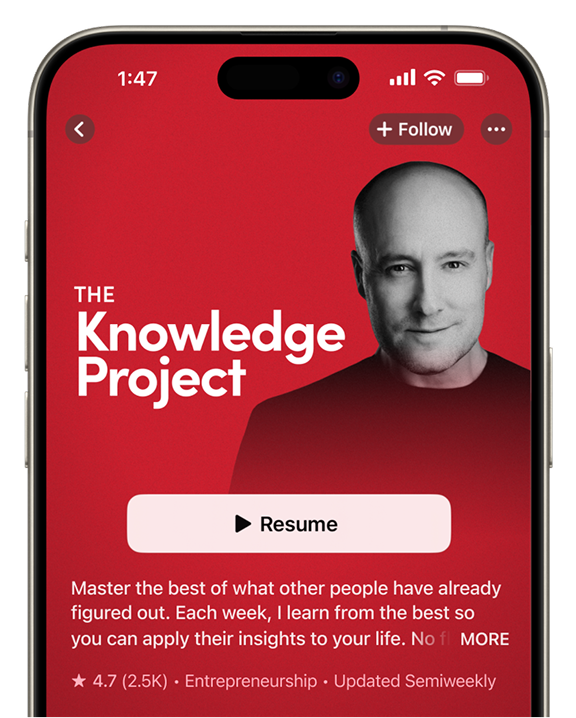
Sol Price is the most influential retailer you’ve never heard of. A man who never sought the spotlight, but whose legacy and lessons cover the entire landscape of modern retail.
Have you ever wondered why you can still buy a hot dog and soda for $1.50 today at Costco? We can thank Sol Price for that. To him, keeping promises to customers mattered more than profit margins.
Available Now: Apple Podcasts | Spotify | Transcript | YouTube
Sam Walton said he borrowed more ideas from Sol Price than anyone else. Jim Sinegal of Costco said, “I didn’t learn a lot from Sol. I learned everything.” Jeff Bezos studied him. Home Depot echoed him.
He invented the warehouse club, pioneered membership retail and built two multi-billion-dollar companies. The real lessons aren’t about what he built, but how he did it.
This episode is based on the book Sol Price: Retail Revolutionary by his son Robert Price.
Lessons from Sol Price:
- Ignorance is a Superpower: Sol had never worked retail when he started FedMart. “Fortunately, we didn’t know what wouldn’t work or what we couldn’t do.” Retail experts knew you couldn’t sell tires next to toothpaste. Sol did it anyway. Experts knew stores needed elaborate displays. Sol used sawhorses and plywood. Experts knew warehouse locations were death. Sol thrived there. Revenue went from zero to $300 million. Sometimes the most dangerous thing you can know is why something won’t work.
- The Intelligent Loss of Sales: Sol Price deliberately chose not to sell small bottles of 3-in-1 Oil. Every hardware store carried three sizes. Sol only stocked the eight-ounce bottle – the best value per ounce. “That’s the intelligent loss of sales,” he explained. He’d rather lose customers who wanted smaller sizes than manage three SKUs. The efficiency gained from handling one product instead of three meant lower prices for everyone. Most businesses fear any lost sale. The best businesses choose which sales to lose.
- Think Like a Fiduciary, Not a Merchant: When Safeway sold sugar below cost, Sol did something insane. He put up signs in FedMart: “Sugar is cheaper at Safeway this week. Go buy it there.” His managers thought he’d lost it. Sol’s view? “I have a fiduciary duty to my members, like a lawyer to clients.” That radical honesty created something powerful. People drove 200 miles round-trip from San Diego to shop at his LA store. When you treat customers like clients, not targets, trust becomes your greatest asset.
- Win-Win: The Math of Success: Most businesses think someone has to lose for them to win. Sol flipped the equation. San Antonio retailers paid 50 cents an hour in 1957. Sol paid a dollar. His advisors thought he’d lost his mind. But turnover disappeared. Theft became almost nonexistent. The best workers lined up to join. Employees treated the business like their own. Paying the minimum gets you minimum effort. Paying double gets you ten times the value.
- Serve One, Completely: Eddie K’s Seven Seas Locker Club only served sailors. Period. Lockers for uniforms. Civilian clothes. Barber shop. Everything a sailor needed on shore leave. While Sol’s small business clients tried competing with everyone, Seven Seas competed with no one. They owned their niche completely. Success doesn’t come from serving everyone a little. It comes from serving someone completely.
- The $1.50 Promise: Hot dog vendors wanted to set up outside Price Club. Sol thought: Why let them profit off our traffic? He sold Hebrew National hot dogs with a soda for $1.50 – at cost, maybe a loss. His son thought he’d lost it. Nearly fifty years later, Costco still sells that combo for $1.50. The CEO said he’d kill anyone who raises it. Some losses aren’t losses. They’re promises that build empires.
- Be a Teacher: Bernie Marcus visited Sol after getting fired, planning revenge lawsuits. Sol’s advice: “Don’t waste time suing. Build something better.” Then Sol walked him through Price Club’s entire operation. Bernie built Home Depot. Sam Walton came with a tape recorder. Sol mailed it back intact after store security confiscated it. Sam built Sam’s Club. Sol joked he “should have worn a condom.” When your principles are sound enough, teaching competitors validates your model. They expand your market. They make your innovation normal.
- Bet on Yourself: At 38, Sol put $5,000 into FedMart. For a small-town lawyer in 1954, that was serious money. When he got fired at 60, most people would retire to a golf course. Sol? He dumped $800,000 of his own cash into Price Club. No backup plan. No safety net. Just conviction that he could figure it out. The first company became a $300 million giant. The second one spawned a trillion-dollar industry. When you believe in what you’re building, go all in. Half-measures guarantee half-results.
- Turn Problems into Principles: There is almost always another way. Texas law in 1957 required separate facilities by race. Sol’s San Antonio solution? Remove every table and chair from the lunch counter. If everyone had to stand, everyone could eat together. When a Dallas bank demanded segregation clauses for his loan, Sol said remove it or no deal. The bank blinked first. He didn’t fight the system. He redesigned around it.
- Convert Charity to Capital: Fresh out of law school, Sol took every charity case free. Hebrew Home for the Aged. Jewish Welfare Society. Other lawyers said he was leaving money on the table. But those charity boards were full of San Diego business owners. When they needed paying legal work, they called Sol. When he needed investors for FedMart, they wrote checks. Give away what others sell. It comes back multiplied.
- The Anti-Manual: Sol refused to create training manuals. Other retailers had thick binders of procedures. Sol had a saying: “You train an animal, you teach a person.” He wanted people who could assess situations and make the right call, not robots following scripts. Jim Sinegal took this to heart – he spent 90% of his time teaching, not managing. Manuals create followers. Teaching creates thinkers.
- The Right Time is Now: December 1975. Sol gets fired from FedMart at sixty – literally locked out. Within one week, he’s signing a lease one floor up in the same building. Every morning, he rides the elevator past the company that fired him. Above his desk, three words: “Do it now.” Seven months later, Price Club opens. Most people need months to process failure. Winners need a week.
- Bounce, Don’t Break: Helen’s parents said Sol wasn’t good enough. Socialist parents, lazy father, drooping eye. He married her anyway with a dollar ring from Woolworth’s. FEDCO rejected his partnership. He built FedMart and crushed them. Hugo Mann locked him out of FedMart at 60. Within a week, Sol signed a lease one floor up. Every morning, he rode the elevator past the company that fired him. Seven months later, Price Club opened. At 87, when PriceSmart tanked, he rescued it with his own money. Three knockdowns. Three comebacks. Each one bigger. Success isn’t avoiding failure. It’s what you do after.
Source:
- Price, Robert E. 2012. Sol Price: Retail Revolutionary & Social Innovator. San Diego: San Diego Sol Price.