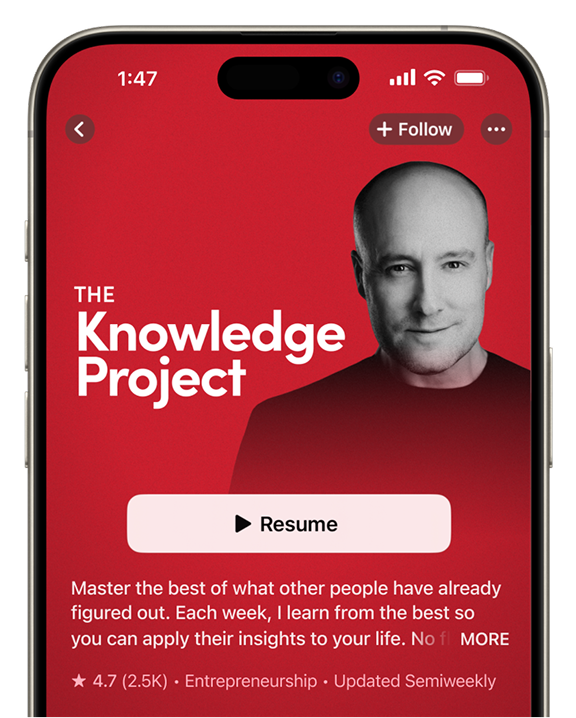
Harvey Firestone built one of America’s great industrial empires from scratch, transforming from a farm boy to Henry Ford’s key partner. This episode reveals timeless principles about building businesses through booms, busts, and technological disruptions.
Available now: Apple Podcasts | Spotify | Transcript
The episode is based on his biography: Men and Rubber: The Story of Business.
The Firestone Principles: 12 Timeless Lessons from an Industrial Pioneer
- A Taste for Saltwater: Most people spit out saltwater; Harvey had learned to savor it. The harsh, uncomfortable conditions that made others quit made him come alive. When the 1920 economic crash left his company drowning in $43 million of debt, his executives wanted to shut down. Harvey’s response? ‘The situation did not frighten me. It put new life into me.’ He saw opportunity where others saw disaster. Excellence isn’t about avoiding difficulty; it’s about developing an appreciation for discomfort.
- Positioning is Leverage: Harvey’s father taught him that ‘a fine crop one year was more or less a fortunate accident.’ Instead of chasing results, Harvey focused on controlling what he could: maintaining surplus reserves (which gave him leverage when others were desperate), questioning every process, and building systematic advantages. When the 1907 panic hit, his reserves let him expand while competitors scrambled for survival. Results are lagging indicators; the only thing you can control is the process.
- High Agency: When industry cartels controlling tire patents and rim manufacturing repeatedly excluded Harvey from their associations, he didn’t accept defeat, he created a better alternative. His new tires outperformed their patented designs, and his rim factory produced better products than theirs. ‘There is always a better way of doing everything than the way which is standard at the moment. It is a good thing for a man to be pushed into finding that better way.’ High agency means treating every ‘no’ as research, not rejection. There is always something you can do to improve the situation.
- The Courage to Close Doors: Harvey could have stayed in the profitable solid tire business, but recognized that “solid tires would soon be a minor product” long before that was conventional wisdom. Despite internal resistance so strong that he had to buy out a major shareholder, he pivoted to the tires we know today. Sometimes you have to kill good options to pursue great ones.
- Bias Toward Action: When the 1920 crisis hit while Harvey was vacationing in Europe, he didn’t form committees or hire consultants. He took the next steamer home, personally took over sales, and implemented a shocking 25% price cut within days. ‘A small reduction would not give the smash we had to have—the big dramatic play.’ The gamble paid off. Firestone moved $18 million in inventory while competitors scrambled to match his prices. Speed beats perfection when conditions demand decisive action.
- Outthink, Don’t Just Outwork: Harvey’s two questions—‘Is it necessary? Can it be simplified?’—transformed operations throughout Firestone. When he questioned why rubber needed months of expensive warehouse aging before use, nobody could explain it. Eliminating this sacred step saved millions in storage costs. The same questions slashed management layers from six to two. The greatest advantage often comes not from working harder within complexity, but from the clarity to recognize and eliminate it.
- Bounce, Don’t Break: Every rejection became a redirection. Excluded from the clincher tire association? He pivoted to develop straight-side tires. Refused by the rim company? He bounced into manufacturing his own. When his first bank loan was denied, he didn’t give up, he learned what he was missing and found a better bank. The key isn’t avoiding walls; it’s maintaining enough flexibility to ricochet in new directions when you hit them. Where others saw dead ends, Harvey saw pivot points.
- Win by Not Losing: When competitors undercut Firestone’s prices, Harvey avoided the two paths to ruin: cutting quality (which destroys reputation) or cutting prices without changing operations (which destroys profits). Instead, he invented a new type of tires that dealers could cut to size, eliminating their inventory costs and escaping price competition entirely. While competitors fought destructive price wars, Harvey sidestepped the battle. Success often comes not from brilliance, but from disciplined avoidance of stupidity—refusing to play games where everyone loses.
- Always Be Unforced: Harvey refused to make decisions from weakness. When executives met him at the dock with catastrophic news: too much debt, banks refusing credit, sales completely stopped—they expected immediate action. Instead, Harvey told them ‘I will not tackle this job until Monday’ and retreated to his family farm. That weekend of clear thinking led to the bold 25% price cut that saved the company. Even under extreme pressure, he acted from choice, not panic. Only move when you choose to.
- Never Delegate Core Responsibilities: While Firestone grew his company to thousands of employees and delegated day-to-day operations, he maintained personal control over critical functions. During the 1920 crisis, when survival was at stake, he sent the sales manager on vacation and personally took over: visiting dealers, setting prices, and closing deals himself. His philosophy was clear: ‘If anything in the business is wrong, the fault is squarely with management… the fault is mine.’ True leadership means accepting ultimate responsibility, especially when it matters most.
- Simple Scales, Fancy Fails: During the boom, Firestone developed elaborate hierarchies, advertising ballooned from 7 to 105 people, multiple management layers generated endless memos, and they even published a million-circulation magazine that lost 15 cents per copy. The crisis revealed this was all theater. Harvey’s two questions, ‘Is it necessary?’ and ‘Can it be simplified?’ cut through the bloat. He eliminated divisions, merged departments, and killed the magazine. The lesson? Success sows the seeds of its own destruction: prosperity breeds complexity, complexity breeds inefficiency, and inefficiency breeds failure.
- Catch the Right Wave: Harvey positioned himself at the intersection of major trends: when automobiles emerged, he pivoted from solid carriage tires to automobile tires; when WWI clogged railroads, he launched the ‘Ship-by-Truck’ movement that helped create America’s trucking industry; when Ford mass-produced cars, he partnered early. Interestingly, he bet wrong on electric beating gasoline, but positioned his tires to work with either. Rather than predicting the future, he positioned for multiple possible futures and rode the waves that materialized. The key? Be at the right intersections when change happens.