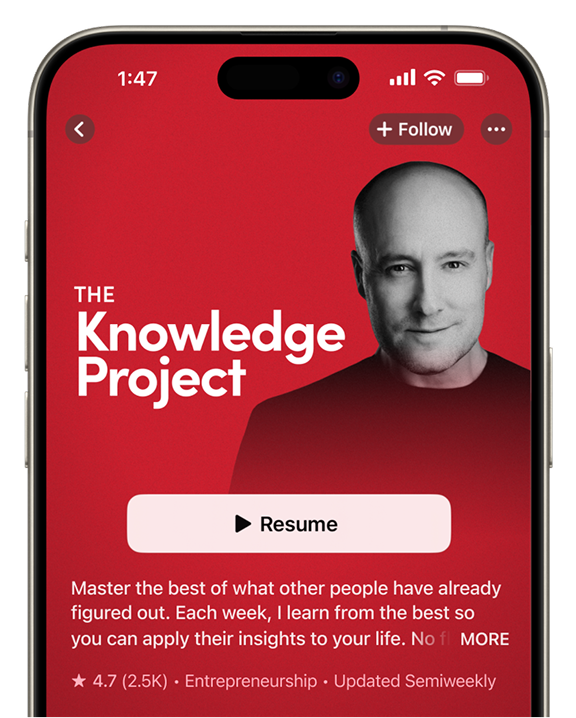
Neuroscientist, psychologist, and author Lisa Feldman Barrett discusses the complexities of the brain, our emotions, improving ourselves and our relationships with others, making good decisions, and giving yourself an existential break.
Listen and Learn: Apple Podcasts | Spotify | Transcript
Here are a few highlights from our conversation:
When it comes to emotion, as with almost everything in biology, variation is the norm. There isn’t one anger. You have a whole population of anger that you can feel, and your brain doesn’t conjure them randomly. It conjures them based on your best guess of what will work in a particular situation.
We need to understand a little bit what it means to say that something is learned. So, they’ll say, oh, so it’s not hardwired, it’s learned. But anything learned is wired into your brain. If it wasn’t wired into your brain it wouldn’t be learned. So the question is, were you born with it or was it bootstrapped into your wiring by experience?
Even though we don’t know each other, if we like each other, if we’re getting along pretty well, if we trust each other in the moment, our biological signals will start to synchronize. Our heart rates will synchronize, our breathing will synchronize. If we know each other really well, when I get a little worked up, you might get a little worked up. Actually, we don’t even have to know each other that well. We just have to be around each other for a little bit of time. People call that emotional contagion but it’s actually not emotional.
If there was only one thing that you could do in your life, only one, it would be sleep a decent amount every day, whatever that means for you. It’s usually somewhere between seven and eight hours for most adults, and it’s longer for kids and adolescents.
There’s actually no fundamental difference biologically between a mental illness and a physical illness. In depression, you have a metabolic problem, and you also feel bad. And those two things are related. In heart disease, you have a metabolic problem and you feel bad. And those two things are related.
When you are running a deficit in your budget, in your bank budget, what do you do? You stop spending. So what does a brain do when it’s running a deficit? It’s also stopped spending. So what does that mean? Well, it might mean you’re too tired and you don’t move as much. It might mean that you stop learning about what’s going on around you in the world because it turns out learning is expensive, metabolically speaking.
What it means to be in control is different than what people usually think. They think about overcoming something in the moment as opposed to making good decisions to architect your environment in such a way as to not let certain things happen.
Stop and take a moment and think about it, and try to observe what’s going on. If you take a moment before the heat of the moment has you in its grip, you will make better decisions.