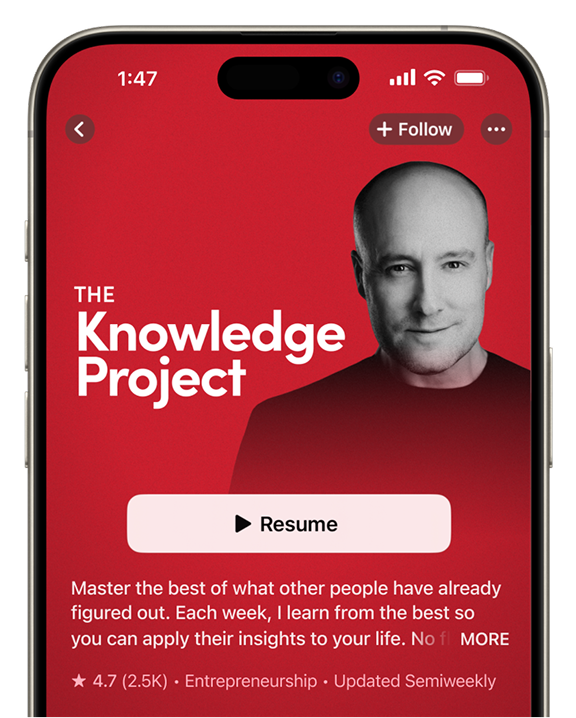
What if people aren’t buying your product or service because their idea of what it does is wrong?
In this episode, Shane asks April Dunford to reveal all her secrets about what makes good and bad product positioning, how a startup should differ in its communications from a big company, and the difference between B2B and B2C positioning. Dunford also shares how a startup can better identify pain points their customers face, how to write the best sales page copy, and the best way to objectively evaluate a product’s positioning.
If you’re an executive at a company, this episode will make you reflect on your current marketing and sales pipelines and ask, “Are we doing this right?” If you’re a designer, engineer, or marketer at a company, this episode will teach you the secrets to selling a product that will help get you promoted and earn trust within your organization.
Audio for Members Only
Only supporting members have access to the show’s audio in their private feed. Access the transcript.
Dunford spent the first 25 years of her career as a startup executive running marketing, product, and sales teams positioning products acquired by companies like IBM and Siebel Systems. Since then, she’s worked with over 200 companies as a consultant, developing a system to better position technology products and companies. She studied Engineering at the University of Waterloo and is most recently the author of Sales Pitch.
Here are a few highlights from our conversation:
I think the best way to think about positioning is that it’s like context setting for products.
If you look at the vast majority of successful companies, they started by dominating a market that was too small for the market leader to care about.
The question we’re trying to answer is, Why pick us? But
Before you write anything, you should be out interviewing customers or potential customers and validating the assumptions that you have about this market.
You can’t tell just using what I would call the “grandmother test.” Would your grandmother understand this? Well, unless you’re selling to grandmothers, it doesn’t matter if the grandmother understands it.